
Find Cheap Flights & Hotels
Search and book the best flight deals for your next trip.
San Marino Travel Guide: Europe’s Best Kept Secret
Imagine a country so small that you can drive across it from one side to the other in less than twenty minutes, yet it has survived as an independent nation for over 1,700 years. San Marino is exactly that. Entirely surrounded by Italy, this tiny republic sits high on the rugged cliffs of Mount Titano. Most travelers bypass it entirely on their way to famous spots like Florence or Rome, which is a huge mistake. If you want an authentic escape from the typical crowded tourist tracks of Europe, this place offers a completely different atmosphere.
Stepping past the old stone walls feels unique. You are not entering just another Italian town; you are walking into an entirely separate sovereign country. It has its own elected leaders, its own laws, and a deep-seated pride in its freedom. The people here do not consider themselves Italian; they are Sammarinese, and they have guarded this identity with passion since the fourth century.
The story goes that a stonemason named Marinus founded the community back in the year 301 AD to escape persecution. Instead of building an expanding empire that would attract enemies, the locals focused entirely on peace, hard work, and self-reliance. They carved their lives directly out of the mountain stone, establishing a sanctuary for anyone seeking freedom.
While the rest of Europe spent centuries fighting major wars, San Marino stayed out of the chaos by using its steep cliffs as a natural shield. Their leaders routinely refused offers to take over more land from neighboring regions, knowing that remaining small was the secret to staying safe. This political wisdom allowed them to survive the rise and fall of surrounding empires without losing their sovereignty.
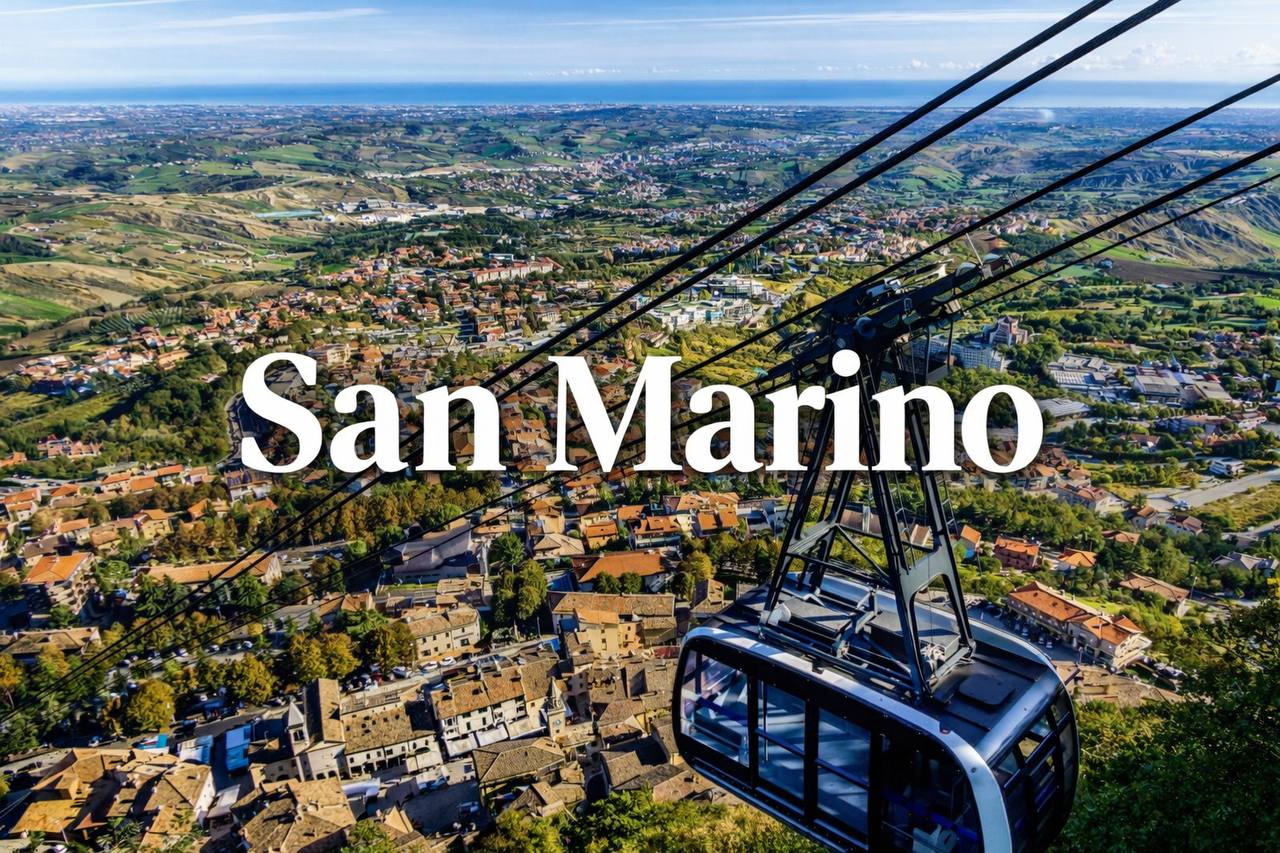
Many first-time visitors immediately notice how clean, crisp, and fresh the mountain air feels up here. The panoramic views stretch across green valley slopes, quiet vineyards, and small Italian villages all the way to the blue rim of the Adriatic Sea. It is a destination where the past is not confined to a history museum; instead, it is built right into the daily lives of the residents.👉 Find Flights to San Marino on Kiwi.com
The Practical Visa and Border Rules
One surprise many visitors don’t expect is how easy it is to cross the international border. Since San Marino maintains an open-door agreement with Italy, you will not find any physical border gates, passport checkpoints, metal fences, or customs officers. You simply drive, ride, or walk straight into the country without a single delay. Because of this specific setup, your entry requirements match Italian immigration laws exactly.
For European Union and Schengen Citizens
If you hold a passport or national identity card from any European Union country or Schengen nation, your trip is perfectly simple. You need no entry permit, no tourist visa, and no advance paperwork. Just carry your standard ID with you in your pocket. Local police on both sides of the border still have the legal right to check your identification at random moments, so keeping it on you is smart.
For International Travelers
If your passport is from a country outside the European Union, such as the United Kingdom, United States, Canada, Australia, or India, your entry depends on your current legal status inside Italy.
- Visa-Exempt Visitors: If your passport allows you to land in Italy without a visa for short tourist stays, you can enter San Marino freely without doing any extra steps. Your days spent on the mountain will count toward your total ninety-day Schengen tourist allowance.
- Visa-Required Travelers: If your nationality requires a visa to enter the European Schengen Zone, you must secure a multiple-entry Schengen Visa before leaving home. You apply for this directly at the Italian Embassy in your home country. San Marino does not issue its own separate visas to bypass European immigration.
Long-Term Stays
Planning to stay on the mountain for more than 90 days for work, retirement, or studies requires moving through a separate residency process. Since national embassies for this microstate are quite rare around the world, you should contact the San Marino Ministry of Foreign Affairs directly online to get the correct paperwork started before you book your trip.
Getting the Souvenir Passport Stamp
Since the border is wide open, your passport will not be stamped when you arrive. If you are a collector who wants a physical record of your visit, you can get an official tourist stamp manually. Walk over to the Official Tourist Information Office near the upper cable car station. Hand your passport to the clerk and pay a flat five-Euro fee. They will place a highly distinctive visa stamp with the official state coat of arms and a colorful revenue sticker inside your book. It makes an excellent, authentic memento of your journey.
Detailed Transit and Airport Logistics
Getting your route right takes a bit of planning. San Marino has no commercial airport of its own, and no train tracks cross its international borders. You have to rely on Italian transportation hubs to reach the base of the mountain, but the regional network makes this process very efficient.
Picking Your Best Airport
Your flight search should focus on the Emilia-Romagna region of Italy. You have two main arrival options depending on your airline preferences.
- Bologna Guglielmo Marconi Airport: This is a practical choice for almost all international visitors. Bologna is a major European transit hub, welcoming flights from main flag carriers and low-cost airlines like Ryanair and EasyJet. Ticket prices stay highly competitive due to the massive volume of daily flights. Once you land, the Marconi Express monorail connects you to the central train station in under ten minutes.
- Federico Fellini International Airport – Rimini: This airport sits much closer, just sixteen kilometers from the border line. The catch is that it mostly handles seasonal summer charters and limited budget routes. If you find a direct flight here that matches your dates, grab it, as it cuts down your road transit significantly.👉 Book Hotels in San Marino on Klook.com
Riding the Train to the Coast
Your immediate goal after landing is to catch a train to the coastal city of Rimini. The Italian rail company, Trenitalia, runs smooth connections down the coast throughout the day.
- High-Speed Trains: Options like the Frecciarossa get you from Bologna to Rimini in roughly fifty-five minutes. They are quiet, air-conditioned, and have dedicated luggage areas, but tickets cost more and require a seat reservation.
- Regional Fast Trains: The Regionale Veloce takes a bit longer—around one hour and fifteen minutes. The big benefit is that ticket prices are fixed and cheap. You can walk up to any station kiosk, buy your ticket, and jump on the next departing train without any advance stress.
Catching the Bonelli Bus to the Mountain
When you walk out of the Rimini Train Station, you have reached the final staging area. One of the easiest ways up the mountain is the international bus line run by Bonelli Bus.
Finding the stop is simple. Walk out the station’s main doors, cross the immediate street, and look to your right near the front of the Hotel Napoleon. You will spot a bus sign clearly listing the San Marino departure times.
- Tickets: You can buy a ticket directly from the driver with cash, at the small ticket kiosks around the square, or online via the Bonelli Bus app. A round-trip ticket saves you time on the way back.
- Cost: A one-way fare runs between six and eight Euros, keeping your border-crossing journey highly affordable.
- Timing: The drive takes fifty to fifty-five minutes. Buses run roughly once every hour during the spring, summer, and autumn months. The schedule thins out a bit in deep winter, so always check the live timetables online before turning up.
- The Arrival: The bus leaves the flat coastal roads behind, crosses the invisible border line, and climbs the winding curves of the mountain. It drops everyone off at Piazzale Calcigni (Bus Parking 1A). This lot sits right at the foot of the old stone walls, giving you immediate access to elevators that lift you directly into the heart of the city.
Exploring the Towers on the Ridge
If you look at any postcard of this country, you will see three stone fortresses sitting on the edge of the mountain cliffs. These are the famous Three Towers. They are built right onto the rocky peaks of Mount Titano and have defended the republic for centuries against neighboring rulers. Walking the pathways between them is an unforgettable experience.
The first fortress you will encounter is Guaita. It is the largest and oldest of the trio, dating back to the eleventh century. The stone walls are incredibly thick and sit right on the bare mountain edge. During times of war, the entire population of the mountain would gather inside these walls for safety.
Inside Guaita, you can wander through open stone courtyards, explore defensive battlements, and look inside the old rooms that served as the national prison up until the 1960s. A useful tip is to look for the central watchtower. You can climb up the narrow wooden ladders inside it. It takes a bit of effort, but the view from the top platform is spectacular. The cliff drops straight down beneath your feet into the green valleys.
The second tower is called Cesta, and it sits on the highest peak of the mountain. To get there, you walk along a stone pathway known as the Witches’ Path. It has solid stone railings to keep you safe from the steep drop, and it is the best place to turn around and take a photo of the first tower behind you.
Cesta houses a fascinating museum filled with old weapons. If you appreciate historical artifacts, you will enjoy looking at the medieval swords, traditional crossbows, and antique suits of armor on display. It gives you a real sense of how the locals protected their home without a massive standing army.
The final and smallest tower is Montale. It is tucked further away along a quieter dirt path through the trees. You cannot go inside this tower because the government keeps it locked to preserve the old stone framework, but the walk out here is worth it. It is peaceful, free of crowds, and surrounded by quiet oak forests where you can sit on the ancient stones and listen to the valley wind.
When buying tickets, make sure to ask for the combined state museum pass at the first tower entrance. It costs around eight Euros and covers your entry to both Guaita and Cesta, which is much cheaper than buying individual tickets at each gate. Also, make sure you are wearing sturdy walking shoes because the stone steps inside these fortresses are uneven and steep.
Walking the Stone Streets of the Old Town
The historic center of the city is an official UNESCO World Heritage Site. The reason it received this honor is that the entire medieval layout remains completely intact. There are no modern skyscrapers or concrete commercial plazas here. Everything is built from traditional gray limestone, keeping the character of the city perfectly safe from modern developments.
Your walk will likely start at the main gate, Porta San Francesco. This heavy stone archway was built in the fourteenth century as a military checkpoint. If you look closely at the walls inside the gate, you can still see old stone plaques containing medieval laws that warned travelers not to bring weapons into the city under severe penalties.
Once you step through the archway, you are in a pedestrian-only zone. No regular cars are allowed on these upper streets, which makes exploring on foot incredibly relaxing. The lanes are narrow and climb steeply up the mountain, lined with small artisan workshops, local clothing boutiques, traditional leather craft shops, and small family cafes.
As you follow the upward path, you will come out into Liberty Square. This is the open heart of the city, featuring a wide stone terrace that looks out over the western hills of Italy. In the center stands the white marble Statue of Liberty, which was a gift to the republic from a German countess in the late nineteenth century as a salute to their independence.
Right behind the statue sits the Government Palace, a beautiful building with a grand clock tower. This is where the national parliament meets. If you happen to visit between July and September, try to stand in the square on the half-hour. You can watch the fortress guards perform their traditional changing of the guard ceremony in their bright green and red uniforms.
A short walk further up leads to the main Basilica. This church has huge columns out front that make it look like an old Roman temple. Inside, the atmosphere is quiet and serious. Beneath the main altar lies a sacred stone box containing the relics of Marinus, the stonemason who founded the community.
If your legs get tired from climbing the steep hills, you can ride the cable car. It glides along heavy cables from the lower market town of Borgo Maggiore up to the edge of the old town cliffs in less than two minutes. A round-trip ticket is very cheap and saves you from walking the steepest lower slopes of the mountain when you first arrive with bags.
Shopping Secrets and Budget Realities
An interesting detail is that San Marino is a duty-free shopping destination. In Italy and the rest of the European Union, a heavy sales tax is added to almost everything you purchase. This country operates under its own tax laws, meaning local shops can sell goods without those expensive European markups, passing the savings directly to you.
The stone streets are full of small shops offering excellent deals on specific items. Visitors often come here to purchase European perfumes, local cosmetics, designer sunglasses, and leather accessories at low prices. The country is also famous for unique hobby shops that sell detailed sword replicas, historical knives, and collector stamps.
Even though it is a separate sovereign country from Italy, San Marino uses the Euro as its official currency. This means you do not have to worry about changing money if you are arriving from Italy. Credit cards and mobile payments work perfectly in every shop and restaurant.
The country also mints its own rare Sammarinese Euro coins with local designs on the back. Since they only make a small number of these coins each year, they are highly valued by collectors. If you pay for a coffee or a snack with cash, check your pocket change carefully before leaving. Finding a coin marked San Marino is like getting a free, authentic souvenir.
If you are visiting, don’t worry about this being an expensive luxury playground like Monaco. San Marino is actually very budget-friendly. A casual lunch of local food costs very little, and the main attractions like walking the city walls, visiting public viewpoints, and exploring the public squares are completely free.
A comfortable three-star hotel room near the historic walls generally runs between fifty and ninety Euros per night. By using the regular bus from Rimini and eating at local cafes, you can easily experience everything this microstate has to offer without spending a fortune.
Local Flavours and Mountain Kitchens
If you love Italian food, you will feel right at home here, but the local kitchen has its own specific character. The recipes are deeply connected to the surrounding hillsides. Local families rely heavily on ingredients harvested right from the fields, olive groves, and vineyards at the base of the mountain.
One of the first local foods many visitors try is Piadina. It is a staple of local street food. The dough is rolled thin and cooked on a hot griddle until it gets light charred spots. A great option is to eat it warm, folded over a soft, creamy local cheese called Squacquerone, fresh slices of prosciutto ham, and wild arugula leaves. It is an affordable, filling lunch to grab while you are busy exploring the town.
When it comes to a sit-down dinner, fresh, hand-rolled egg pasta takes over the menu. Local cooks take massive pride in making their pasta from scratch every single morning using traditional rolling pins.
A true comforting choice is Cappelletti in Brodo. These are tiny, hand-folded meat pastas shaped like little hats, served inside a piping hot, clear meat broth. It is simple, traditional, and perfect if you are visiting during the cooler autumn months.
If you prefer a rich sauce, go for the Tagliatelle al Ragù. These long ribbons of fresh pasta are tossed in a thick meat sauce that is cooked slowly for hours with fresh herbs and local beef.
For dessert, ask for a slice of Torta Tre Monti, which translates to the Cake of the Three Mountains. It is a sweet crispy wafer cake made with layers of hazelnut and cocoa cream.
The outer edge of the round cake is dipped in dark chocolate to seal it. You can buy these in large decorative tins at almost any bakery in the old town, and they pair beautifully with a hot afternoon espresso.
Smart Travel Planning & Overnight Tips
To get the most out of your visit, you need to understand the daily rhythm of the mountain. Because San Marino sits so close to the beach resorts of the Italian coast, thousands of day-trippers turn up every single morning on tour buses, filling the main walking areas.
A practical choice is to plan your trip during May, June, September, or October. The weather is warm enough for comfortable walking, and the views stay clear.
July and August bring great summer festivals, but the narrow lanes become intensely packed with crowds between eleven in the morning and three in the afternoon. Winter is quiet and cold, offering empty streets that look beautiful if a light snow falls on the stone battlements.
The biggest mistake most travelers make is treating this country as a quick four-hour afternoon stop. They arrive at noon, walk up to the towers shoulder-to-shoulder with crowds, and catch the bus back to Italy before dark, missing the finest part of the day.
A useful tip is to book a hotel and spend at least one night on the mountain. Around four in the afternoon, the tour buses pack up and leave, taking the midday crowds with them.
A deep, peaceful quiet settles over the old town, and the sunset over the Apennine Mountains is incredible. Walking through the empty, softly lit stone lanes at night feels like stepping directly into the fourteenth century.
Be prepared for the physical layout of the city. There are almost no flat streets within the upper stone walls; everything is a steep climb or a winding staircase.
Leave your flat dress shoes or flip-flops behind and wear proper walking sneakers with a solid rubber grip. To save your energy when moving luggage, look out for the public elevators that connect the lower bus parking lots directly to the upper gates.
Frequently Asked Questions
Is San Marino actually an independent country?
Yes, it is a fully independent sovereign state with its own constitution, its own elected parliament, separate laws, and an independent national identity. It is a separate sovereign country from Italy.
What is the main language spoken?
The language of the country is Italian. Because the republic is completely surrounded by Italian territory, the daily communication and customs match. However, English is widely understood by staff working inside the local hotels and restaurants.
Is the country safe for travelers?
Most visitors find San Marino extremely safe, even when walking around the narrow stone pathways after dark. Serious crime is rare here, making it very comfortable for families and people traveling alone.
Will my mobile phone data work here?
Since it is an independent nation outside the European Union, standard EU roaming packages do not legally apply here. However, because the country uses nearby Italian cellular towers, most Italian mobile signals cross the border smoothly. Just check with your provider before arriving to avoid surprise fees.
Can I drive my car into the historic center?
No, the old town is a pedestrian-only zone protected by strict traffic laws. If you are driving a car, you must leave it in one of the paid public parking lots located just outside the old stone gates and walk inside.
Final Thoughts
In a world where many travel destinations are starting to look identical and commercialized, San Marino remains a genuinely unique corner of Europe. It is a community that has managed to protect its ancient borders and independent way of life for over a thousand years without losing its character.
Visiting this microstate gives you a brilliant mix of medieval history, breathtaking panoramic views, and surprisingly low prices. By planning your transport from the Rimini train station carefully, wearing the right footwear, and choosing to stay overnight, you will get to experience the quiet evening streets and enjoy a trip you will remember for a long time. It stands as a lasting reminder that historical depth and natural beauty have absolutely nothing to do with the physical size of a country.
Before you fly, please buy an eSIM for San marino so you can use maps, transport apps and travel information as soon as you arrive.
Got any questions about planning your trip, or did you find this guide helpful?
👉 Read Our Previous Estonia Travel Guide Here
Drop a comment below and share your thoughts. Your feedback is incredibly important to us!
- ✅ Get the best flight deals and save money ✈️
Discover unbeatable flight deals - ✅ Find top-rated hotels at the best prices 🏨
Browse affordable flight options - ✅ Compare travel options instantly 🔎
Compare cheap flights worldwide - ✅ Discover amazing tours and experiences 🌍
Find budget-friendly airfare - ✅ Stay connected anywhere with travel eSIM 📶
Search the best flight prices - ✅ Protect your trip with reliable insurance 🛡️
Book cheap flights today