
Find Cheap Flights & Hotels
Search and book the best flight deals for your next trip.
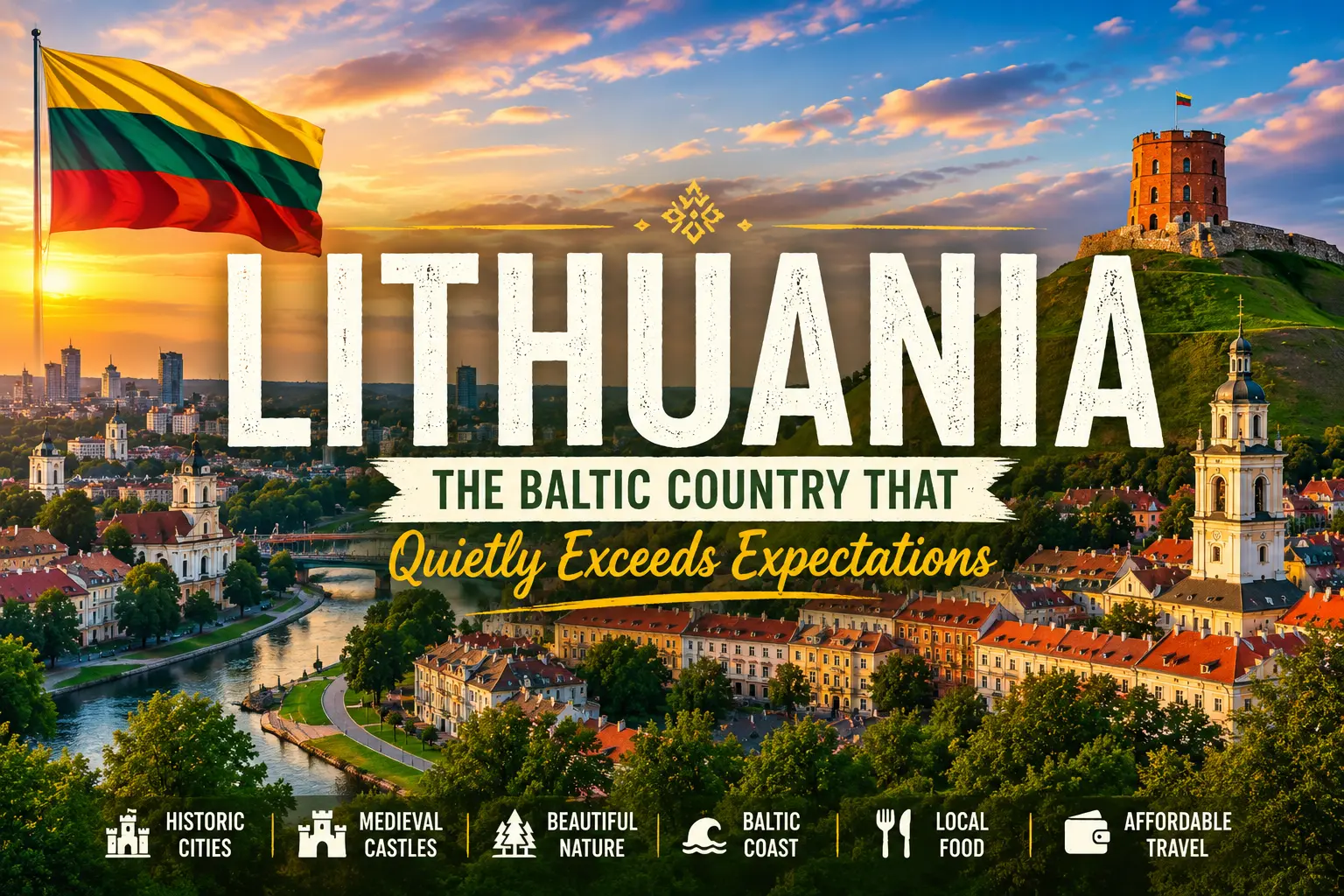
Lithuania Travel Guide: The Baltic Country That Quietly Exceeds Expectations
When people talk about European travel, the same destinations usually dominate the conversation. Italy, Spain, France, Greece, and Portugal attract millions of visitors every year, and for good reason. They are beautiful, historic, and filled with famous landmarks.
Lithuania rarely gets the same attention.
Before visiting, I knew surprisingly little about the country beyond its location on the Baltic Sea. I expected a pleasant but relatively ordinary destination. What I found instead was a country that felt refreshingly authentic, easy to explore, and far more diverse than I had imagined.
Over the course of a week, I wandered through medieval streets in Vilnius, watched the sunset over a lakeside castle in Trakai, explored creative neighborhoods in Kaunas, and cycled through some of the most beautiful coastal scenery I’ve seen in Northern Europe.
Lithuania may not be the loudest destination on the continent, but that is part of its charm.
For travelers from Europe and North America looking for an affordable, meaningful, and less crowded European experience, Lithuania deserves serious consideration.
Why Visit Lithuania?
One of Lithuania’s biggest strengths is balance.
Many destinations excel in one area. Some are known for beaches. Others focus on history, nightlife, or nature. Lithuania manages to combine several experiences without requiring long travel days between them.
In a single trip, you can explore historic city centers, visit medieval castles, relax beside lakes, discover Baltic coastal landscapes, and enjoy local food that still feels connected to tradition.
Another thing that stood out to me was how manageable the country felt.
Travel between major destinations is straightforward, public transportation is reliable, and English is widely spoken in tourist areas. Instead of spending time solving logistical problems, I found myself focusing on the actual experience of traveling.
That alone made the trip more enjoyable.
Vilnius: A Capital That Rewards Slow Travel
Most journeys through Lithuania begin in Vilnius, and it’s an excellent introduction to the country.
The capital sits among rolling hills where the Neris and Vilnia rivers meet. At first glance, it looks like a classic European city filled with churches, historic buildings, and cobblestone streets.
Spend more time there, however, and the city begins to reveal its personality.
What I liked most about Vilnius was how easy it was to explore without a strict plan.
On my first morning, I left my hotel intending to visit a few specific landmarks. Within an hour, I had completely abandoned the itinerary. Small side streets, hidden courtyards, and local cafés kept pulling me in different directions.
Some cities reward efficiency.
Vilnius rewards curiosity.
Exploring the Old Town
The Old Town is the historic heart of the city and one of the largest preserved old towns in Europe.
Walking through the area feels like moving through different periods of history. Gothic churches stand near Baroque façades, while narrow medieval streets suddenly open into lively public squares.
What surprised me was how lived-in the district felt.
In some European cities, historic centers can feel like outdoor museums. In Vilnius, local life remains very visible. Students cross university courtyards, residents shop at neighborhood stores, and people gather in cafés that seem designed for conversation rather than tourism.
If you enjoy photography, this part of the city can easily consume an entire day.
Cathedral Square and Gediminas Tower
Nearly every visitor eventually finds themselves in Cathedral Square.
The area serves as one of the city’s main gathering places and provides a convenient starting point for sightseeing.
A short walk away stands Gediminas Tower.
The climb is relatively easy, and the view from the top is worth the effort. Looking across Vilnius, you can see church spires, red rooftops, green parks, and modern districts sharing the same skyline.
I arrived planning to stay for ten minutes and ended up spending almost forty.
The Creative Side of Užupis
One neighborhood that left a lasting impression was Užupis.
Often described as Vilnius’ artistic district, it sits just across a small bridge from the Old Town. The atmosphere changes almost immediately.
Street art appears on walls. Independent galleries occupy small buildings. Cafés spill onto sidewalks.
What I appreciated most wasn’t any particular attraction.
It was the pace.
People seemed less hurried here. Conversations lasted longer. The entire neighborhood felt comfortable in its own identity.
Even travelers who normally avoid creative districts often end up enjoying Užupis.
👉Find the Perfect Place to Stay
Trakai: Lithuania’s Most Beautiful Day Trip
Located roughly thirty kilometers from Vilnius, Trakai is one of the easiest day trips in the country.
The train journey takes less than an hour, and the scenery gradually shifts from urban landscapes to forests and lakes.
Then the castle appears.
Trakai Island Castle
Few landmarks in Lithuania are as recognizable as Trakai Island Castle.
Built on an island in Lake Galvė and connected to the shore by a wooden bridge, the castle looks almost exactly how people imagine a medieval fortress should look.
Yet the surrounding environment impressed me just as much as the building itself.
The lake reflects the red brick walls. Forests stretch into the distance. Boats move slowly across the water during summer.
Even visitors with little interest in history often enjoy Trakai because of the setting.
Beyond the Castle
Many travelers visit the castle and leave shortly afterward.
I would recommend staying longer.
Walking around the lakeshore reveals beautiful viewpoints that don’t always appear in guidebooks. During warmer months, you can rent kayaks, paddleboards, or simply relax near the water.
The atmosphere encourages people to slow down.
That seems to be a recurring theme throughout Lithuania.
Don’t Leave Without Trying Kibinai
Trakai is famous for Kibinai, a pastry associated with the Karaim community.
The filling varies from meat to vegetables and cheese, but the result is always satisfying.
Simple local food often creates some of the strongest travel memories, and Kibinai became one of those unexpected highlights for me.
Kaunas: The City That Surprised Me Most
I’ll admit something.
Before arriving in Kaunas, I wasn’t expecting much.
That turned out to be a mistake.
Lithuania’s second-largest city ended up becoming one of my favorite stops.
Walking Through the City
Kaunas feels noticeably different from Vilnius.
The streets are broader, the atmosphere is slightly less tourist-oriented, and everyday life takes center stage.
Rather than trying to impress visitors, the city simply seems comfortable being itself.
That confidence is appealing.
Liberty Avenue
Laisvės Alėja, or Liberty Avenue, is one of the city’s main pedestrian streets.
I spent an afternoon here doing very little.
Coffee. Walking. People-watching.
Sometimes the best travel experiences aren’t tied to major attractions. They’re simply moments where you feel connected to a place.
Kaunas provided several of those moments.
Street Art and Modern Creativity
One thing I didn’t expect was the city’s vibrant creative scene.
Murals appear throughout Kaunas, transforming ordinary buildings into enormous public artworks.
Combined with independent cafés, galleries, and cultural venues, the city feels contemporary without losing its connection to history.
The Devil’s Museum
Among Kaunas’ most unusual attractions is the Devil’s Museum.
The collection includes thousands of sculptures, carvings, and artworks featuring devil imagery from different cultures.
It sounds strange.
It is strange.
But it’s also surprisingly interesting.
Lithuania’s Baltic Coast
Many first-time visitors focus entirely on Lithuania’s cities.
That would be a mistake.
The Baltic coast offers a completely different side of the country.
Klaipėda
Klaipėda serves as Lithuania’s primary port city and gateway to the coast.
Its maritime atmosphere immediately distinguishes it from Vilnius and Kaunas.
Walking along the waterfront in the evening became one of my favorite routines. Ships moved slowly through the harbor, locals gathered along the promenade, and outdoor cafés gradually filled with people enjoying the end of the day.
The city feels relaxed in a way that is difficult to explain until you experience it.
The Beaches
Before visiting Lithuania, I expected the Baltic coast to feel cold and windswept.
Instead, I discovered long sandy beaches backed by forests and dunes.
The coastline doesn’t rely on dramatic scenery. Its beauty comes from simplicity.
One afternoon, I walked along the beach for nearly half an hour without encountering more than a few people.
That sense of space felt increasingly rare in Europe.
The Curonian Spit: A Place That Exceeds Expectations
If I had to choose a single highlight from the trip, the Curonian Spit would be near the top of the list.
This narrow strip of land separates the Baltic Sea from the Curonian Lagoon and contains some of Lithuania’s most remarkable landscapes.
Nida
Nida is the region’s best-known village.
The atmosphere is difficult to describe without sounding overly romantic.
Quiet streets. Traditional houses. Forest paths. Beaches that seem to stretch endlessly.
Nothing feels rushed.
Nothing feels overcrowded.
The village encourages visitors to slow down and appreciate their surroundings.
Parnidis Dune
Standing atop Parnidis Dune provides one of the best views in Lithuania.
From the summit, you can see both the Baltic Sea and the lagoon.
The wind constantly reshapes the sand, creating a landscape that changes over time.
Photos capture part of the beauty.
Being there captures the rest.
Exploring by Bicycle
Cycling is arguably the best way to experience the Curonian Spit.
The terrain is manageable, dedicated paths are plentiful, and the scenery changes constantly.
I found myself stopping every few minutes, not because I was tired, but because another viewpoint or trail kept appearing.
Food Worth Trying
Lithuanian cuisine tends to be hearty, practical, and deeply connected to local traditions.
Cepelinai
These large potato dumplings are often considered Lithuania’s national dish.
After ordering my first serving, I quickly realized why locals consider it serious comfort food.
It’s filling, satisfying, and ideal after a long day of exploring.
Šaltibarščiai
This cold beet soup is impossible to miss because of its bright pink color.
At first glance, it looks unusual.
After the first few bites, it becomes easy to understand why it remains so popular.
Local Markets
Whenever possible, I try to visit local markets while traveling.
Lithuania’s markets offered fresh produce, cheeses, breads, honey, smoked meats, and plenty of opportunities to observe daily life.
They felt authentic rather than designed specifically for visitors.
Travel Costs and Budget Expectations
Compared with many Western European destinations, Lithuania offers excellent value.
Accommodation, transportation, and dining generally remain affordable.
Budget travelers can comfortably use hostels and public transportation, while mid-range travelers often discover boutique hotels and quality restaurants at prices that would be difficult to find elsewhere in Europe.
That doesn’t mean Lithuania is extremely cheap.
But it does mean your travel budget often stretches further than expected.
Best Time to Visit
Summer is the most popular season thanks to warm weather and long daylight hours.
However, autumn may be Lithuania’s best-kept secret.
The forests become colorful, temperatures remain comfortable, and crowds begin to thin.
Spring also offers pleasant conditions, particularly for city exploration and nature walks.
Winter can be cold, but Christmas markets and seasonal celebrations create a different kind of appeal.
Frequently Asked Questions
How many days do you need in Lithuania?
Five to seven days is enough to experience Vilnius, Trakai, Kaunas, and the Baltic coast without feeling rushed.
Is Lithuania expensive?
Compared with much of Western Europe, Lithuania generally offers good value for travelers.
Is English widely spoken?
Yes. English is commonly spoken in tourist areas, hotels, restaurants, and by younger generations.
Is Lithuania safe?
Lithuania is generally considered a safe destination for visitors. Standard travel precautions are recommended.
What currency does Lithuania use?
Lithuania uses the Euro (€).
Final Thoughts
Lithuania may never attract the same attention as Europe’s most famous destinations.
Honestly, that’s part of the appeal.
The country offers history, culture, nature, and genuine local character without demanding constant crowds or inflated prices.
What stayed with me most wasn’t a single landmark.
It was the atmosphere.
The quiet streets of Vilnius in the morning. The view across Lake Galvė in Trakai. The unexpected creativity of Kaunas. The feeling of cycling through the Curonian Spit with no particular destination in mind.
Those moments rarely make it onto postcards.
Yet they’re often the memories that last the longest.
For travelers looking beyond Europe’s most obvious choices, Lithuania offers something increasingly valuable: the chance to explore a destination that still feels refreshingly real.
BEFORE YOU TRAVEL: Don’t get stuck with expensive roaming fees in Europe’s most digital country. Get connected instantly the moment you land by grabbing a high-speed Baltic eSIM.👉Click here to activate your European eSIM today.
👉 Read the Complete Estonia Travel Guide
Got questions or travel tips to share? Leave a comment below — your thoughts and feedback are always welcome!
✅ Travel Deals You Should Check
- ✅ Get the best flight deals and save money ✈️
Discover unbeatable flight deals - ✅ Find top-rated hotels at the best prices 🏨
Browse affordable flight options - ✅ Compare travel options instantly 🔎
Compare cheap flights worldwide - ✅ Discover amazing tours and experiences 🌍
Find budget-friendly airfare - ✅ Stay connected anywhere with travel eSIM 📶
Search the best eSIM - ✅ Protect your trip with reliable insurance 🛡️