
The Ultimate Florence Landmarks Guide: Written by Someone Who Actually Walked These Streets
Most of what you see online about Florence looks like a postcard. You see the massive red dome of the Duomo or the golden lights reflecting off the river at Ponte Vecchio, and you think you know what to expect. But there is a huge difference between looking at a glossy travel blog and actually walking on those uneven, ancient cobblestones yourself.
When I visited Florence (Firenze), I wanted to see if the city really lived up to the hype. I spent days getting lost in narrow alleyways, eating local street food, and standing face-to-face with some of the oldest monuments in Europe. Florence is a beautiful city, but it can be exhausting if you do not have a plan. To help you navigate it all, here is a realistic guide to the absolute best landmarks in Florence, based on my own footsteps...👉Find the Best Flights to Florence on Kiwi.com
Why Florence Became the Birthplace of the Renaissance
To truly appreciate the landmarks you see today, it helps to understand why this small Tuscan city became the cultural and artistic center of the world in the 14th century. Before the Renaissance, Europe was firmly in the Middle Ages. Florence transformed this status quo due to a unique combination of wealth, trade, and powerful families.
The city grew rich through its dominant textile industry and international banking. Florentine gold coins, known as florins, became the trusted currency of European commerce. With this immense wealth came a new class of powerful merchants and rulers, most notably the House of Medici.
The Medici family did not just rule Florence; they funded it. They used their banking fortune to patronize artists, architects, and scientists. Because of their financial support, geniuses like Michelangelo, Leonardo da Vinci, and Brunelleschi had the freedom to create masterpieces that changed the course of human history. The landmarks you walk past today are the direct result of this golden age of commerce and creativity.
The Big Five Sights Ranked
If you are planning your itinerary, here is a realistic ranking of the top five landmarks based on historical importance, visual beauty, and overall visitor experience.
1. The Duomo (Cattedrale di Santa Maria del Fiore)
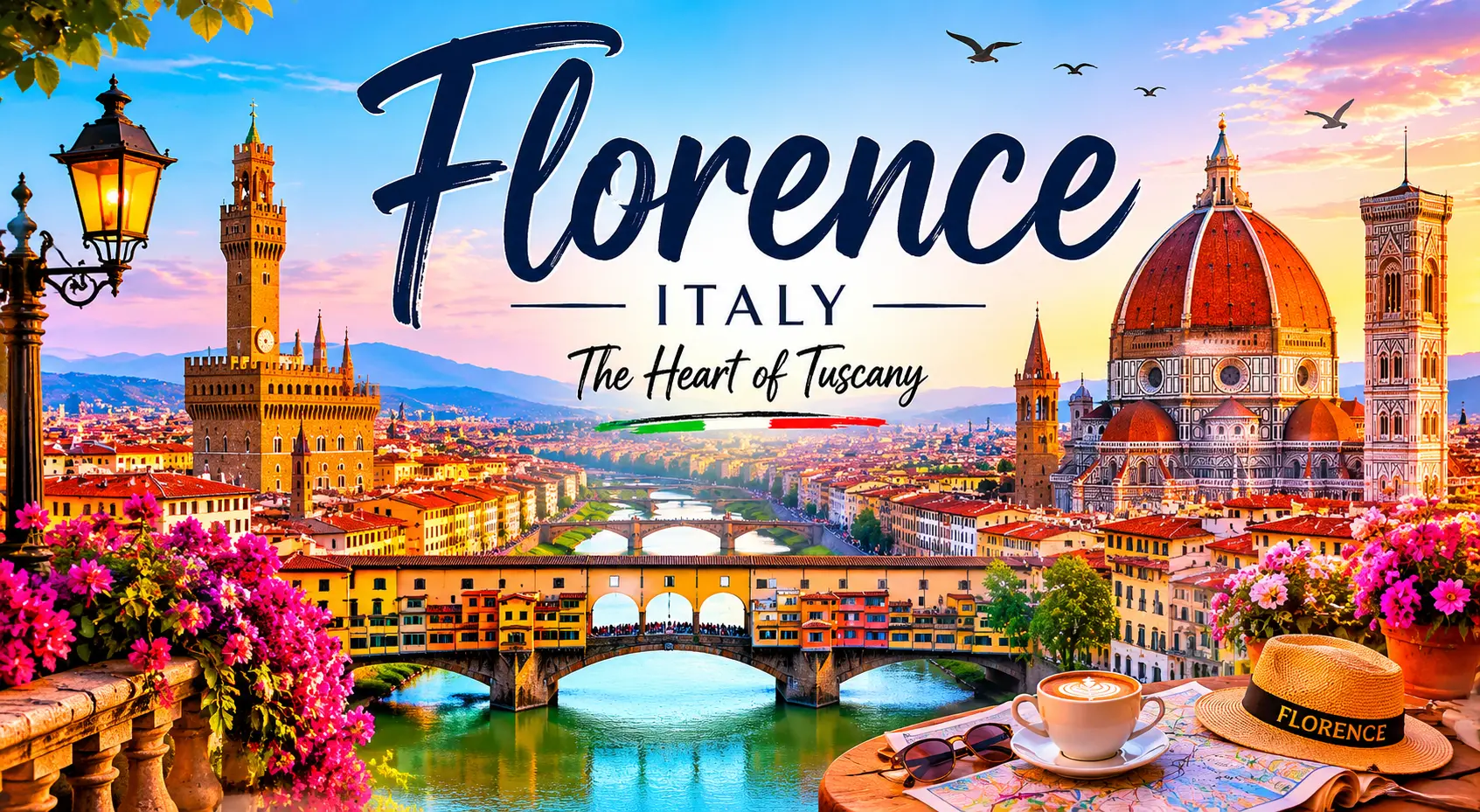
This is the giant cathedral that dominates the entire city skyline. The exterior is covered in green, pink, and white marble, and it looks completely surreal the first time you turn the corner and see it.
- The Reality: Standing outside in the square is free and beautiful, but the line to get inside the actual cathedral moves very slowly. If you want to climb the 463 steps to the very top of the Dome, you have to buy a ticket months in advance. There are no walk-ins for the climb.
- My Advice: If the Dome tickets are sold out for your dates, do not stress. Buy a ticket for Giotto’s Bell Tower right next to it instead. It has 414 steps, fewer crowds, and the view from the top is arguably better because you can actually see the famous Dome in your photos.
2. The Uffizi Gallery
This is one of the most famous art museums in the world, holding massive Renaissance masterpieces by artists like Leonardo da Vinci, Raphael, and Botticelli.
- The Reality: You cannot easily buy a ticket at the door. If you show up without a reservation, you risk wasting two to three hours of your day standing in a miserable queue outside.
- My Advice: Book a timed ticket online weeks before you leave home. Try to get the very first slot of the morning at 8:15 AM. The minute they open the doors, walk past the first few rooms and go straight to the Botticelli rooms to see The Birth of Venus. You will get a few minutes of quiet before the big tour groups catch up.
3. Ponte Vecchio (The Old Bridge)
This medieval stone bridge over the Arno River is famous because it has tiny, colorful jewelry shops built right onto its sides. It feels like a little village floating over the water.
- The Reality: Walking across the bridge is incredibly packed. It is loud, full of street musicians, and crowded with tour groups.
- My Advice: Many visitors find better value buying jewelry away from the bridge to avoid tourist premiums. For the best experience, walk away from Ponte Vecchio and head to the next bridge down, called Ponte Santa Trinita, right before sunset. You will get a perfect view of the old bridge turning golden in the evening light.
4. Piazzale Michelangelo
If you want that classic, panoramic photo of Florence where you can see the whole city and the river, this square on top of the hill is where you go.
- The Reality: The walk up the hill from the riverbank is a very steep hike. If it is a hot day or you are tired, save your energy and catch Bus 12 or 13 from the train station straight to the top.
- My Advice: Everyone goes here for sunset, so the stone steps get incredibly crowded. If you want a bit of quiet, walk another 10 minutes further up the hill to a 1,000-year-old church called San Miniato al Monte. It is higher up and completely free.
5. Galleria dell’Accademia
This museum is much smaller than the Uffizi, and almost everyone visits for just one reason: to see Michelangelo’s giant marble statue of David.
- The Reality: Even with a pre-booked ticket, you will still have to wait in a short security line outside. The room where David stands is always packed with people holding up smartphones.
- My Advice: The statue is incredible and worth the visit, but do not just stare at David and walk out. In the hallway leading up to him, look at Michelangelo’s unfinished sculptures, known as The Slaves. You can see the hammer and chisel marks in the rough stone, which gives you a really cool look into how he actually worked.
Hidden Landmarks and Best Photo Locations
Florence has many famous sights, but it also holds quiet, hidden corners that most tourists walk straight past. Exploring these lesser-known spots and knowing exactly where to take your photos will make your trip much more rewarding.
Hidden Landmarks Most Tourists Miss
- The Wine Windows (Buchette del Vino): These are tiny arched windows cut into the stone walls of old Renaissance palaces. They were used in the 17th century to sell wine safely during the plague. While many are now boarded up, walking through the quieter streets of the Oltrarno neighborhood reveals active windows where you can ring a little brass bell to order a glass of wine directly through the wall.
- San Miniato al Monte: Located just ten minutes further up the hill from the crowded steps of Piazzale Michelangelo, this 1,000-year-old church is one of the highest points in Florence. It is completely free, peaceful, and offers an incredible view of the city. If you visit around 5:30 PM, you can hear the resident monks singing Gregorian chants.
- The Bardini Gardens (Giardino Bardini): Often overshadowed by the neighboring Boboli Gardens, this terraced hillside garden is much quieter. It offers beautiful views of the Florence skyline, classic statues, and a famous wisteria tunnel that blooms beautifully in the spring months.
Best Photo Locations in Florence
If you want to capture the best visual memories of your trip without the stress of crowds blocking your camera, keep these specific locations in mind:
- Ponte Santa Trinita (For Ponte Vecchio Photos): Do not try to take a photo of the Ponte Vecchio while standing on it. Instead, walk down to the next bridge, Ponte Santa Trinita, right before sunset. This spot gives you a perfect, unobstructed view of the old bridge turning golden in the evening light.
- The Top of Giotto’s Bell Tower (For Duomo Photos): While climbing the Duomo dome is highly popular, climbing the neighboring Bell Tower gives you a panoramic view of the city that actually includes the massive, beautiful red Dome in your photographs.
- Via dei Servi (For Framed Duomo Photos): Walking down this specific street toward the cathedral offers a dramatic framing effect. The massive dome appears to rise up sharply between the traditional stone residential buildings as you get closer.Book Your Perfect Florence Hotel on Klook.com
Landmark Ticket Guide
Planning your days around the main monuments in Florence requires knowing which places require payment, whether you need to reserve your entry beforehand, and how much time to allocate for each stop. This practical breakdown will help you organize your daily schedule efficiently.
The Duomo (Cathedral, Dome, and Bell Tower)
- Ticket Required: Entering the main floor of the cathedral is completely free. However, you must purchase a paid combination ticket to climb the Dome, climb Giotto’s Bell Tower, or visit the underground crypt and the Duomo Museum.
- Booking Needed: Reserving a specific entry time is mandatory for climbing the Dome. Due to high demand, these reservation slots often fill up weeks before arrival. The Bell Tower and museum do not require a specific time slot reservation but still require a valid combination ticket.
- Average Visit Time: Spending time on the main cathedral floor takes about forty-five minutes. Climbing either the Dome or the Bell Tower takes around one and a half hours for each climb.
- Best Time to Visit: Arrive at the square before nine in the morning to enjoy the exterior views comfortably, or queue for the free cathedral entry late in the afternoon when day-trippers begin to leave.
The Uffizi Gallery
- Ticket Required: Yes, a paid entry ticket is required for all visitors.
- Booking Needed: Securing a timed-entry ticket online before your trip is highly recommended. Choosing to show up without a pre-booked slot often results in spending two to three hours waiting in the general admission queue outside.
- Average Visit Time: Because the museum is massive and spans multiple floors, plan to spend two to three hours inside to see the main masterpieces.
- Best Time to Visit: Book the very first admission slot of the morning at a quarter past eight. This allows you to walk past the initial rooms and see the most famous paintings before the large commercial tour groups fill the hallways.
Ponte Vecchio
- Ticket Required: No, this is a public stone bridge and is completely free to cross at any hour.
- Booking Needed: No reservations are needed.
- Average Visit Time: Walking across the bridge, looking at the shop windows, and taking photos takes about thirty minutes.
- Best Time to Visit: Early in the morning offers a quiet walk while the shops are still closed. Late in the evening is also an excellent time, as local musicians often perform in the center of the bridge after dark.
Piazzale Michelangelo
- Ticket Required: No, the hilltop terrace is a public square and is entirely free to visit.
- Booking Needed: No reservations are required.
- Average Visit Time: Spending time on the terrace, enjoying the skyline view, and resting takes about one hour.
- Best Time to Visit: Sunset is the most visually spectacular time to visit, though it is also the most crowded. Visiting at dawn offers complete peace and beautiful morning light over the river.
Galleria dell’Accademia
- Ticket Required: Yes, a paid admission ticket is mandatory.
- Booking Needed: Booking a timed-entry slot online weeks in advance is highly recommended to avoid long outdoor lines.
- Average Visit Time: The museum is relatively small, so one hour is typically enough time to see the statue of David and the surrounding galleries.
- Best Time to Visit: Late afternoon, around four o’clock, is often quieter as the morning tour groups start to head out of the historic center.
Authentic Florentine Street Food on a Budget
Eating in Florence can quickly become an expensive part of your journey if you only sit down at restaurants located in the main tourist squares. Many of those establishments charge a hidden seating fee, known locally as a coperto, and serve mass-produced food targeted at visitors. If you want to eat like a real local and save money, the best food in Florence is actually found on the streets.
Lampredotto: The King of Florentine Street Food
You cannot discuss Florence without mentioning Lampredotto. This is the ultimate working-class dish of the city, and it has been eaten here for centuries. It is made from the fourth stomach of a cow, slow-cooked in a rich broth with tomatoes, onions, celery, and parsley. It is then chopped up and served inside a crusty bread roll that has been dipped in the cooking broth. Usually, it is topped with a spicy red sauce or a green herb sauce.
- The Reality: The idea of eating tripe or stomach meat scares away many international visitors. Because of this, you will rarely see large tour groups at the local sandwich stalls.
- My Advice: Forget your doubts and try it at least once. It tastes like very tender, slow-cooked beef roast, and it costs only a fraction of a sit-down restaurant meal. The best places to buy it are from the small outdoor food carts, known as Trippai, scattered around the city. Look for the carts where local taxi drivers and construction workers are standing in line.
Schiacciata: The Famous Florentine Flatbread
Schiacciata is a traditional Tuscan flatbread that is baked with plenty of olive oil and salt. It is crispy on the outside, soft on the inside, and local bakeries split it open to stuff it with fresh ingredients like prosciutto, pecorino cheese, arugula, and truffle cream to make the perfect sandwich.
- The Reality: There is one incredibly famous sandwich shop near the Uffizi Gallery that has gone viral on social media. The lines there stretch down the block, and people wait for over an hour just to buy a sandwich and eat it while sitting on the dirty curb.
- My Advice: Do not waste your limited time standing in a social media line. There are dozens of small, independent bakeries, called Forno, throughout the city center that bake fresh Schiacciata every single morning. Walk into any quiet bakery away from the main museums, point to the ingredients you want, and you will get an identical sandwich for less money without the stressful crowd. Many visitors find better value and shorter waits at these independent bakeries.
Coccoli: A Hidden Fried Snack
Coccoli are small, bite-sized balls of yeast dough that are deep-fried until they are golden brown and puffy. They are traditionally served hot out of the fryer, accompanied by soft, spreadable stracchino cheese and slices of salty prosciutto.
- The Reality: This is a snack that many visitors completely miss because it is rarely listed on standard tourist menus. It is mostly found in traditional local pizzerias or small fry-shops.
- My Advice: This makes the perfect late-afternoon snack when you are tired from walking and need a quick energy boost. Look for traditional bakeries or small shops that display them in the window, and eat them while they are still warm enough to melt the cheese.
Visitor Rules, Etiquette, and Common Tourist Mistakes
Florence is an ancient, compact city that was never built to handle millions of international tourists. Because of this, the city government frequently enforces local regulations to manage the crowds and protect the historical heritage. Understanding these rules and avoiding common pitfalls will ensure your trip runs smoothly.
Visitor Rules and Etiquette in Florence
The local government enforces several measures to control the high volume of visitors and protect the historical UNESCO center. These guidelines ensure the city remains livable for local residents and preserved for future travelers.
- Independent Vacation Rentals: The city enforces strict regulations regarding short-term rental properties in the historic core. This includes a ban on external lockboxes or key boxes attached to the front of residential buildings in the historic center. If you book an independent apartment style stay, contact your host directly before arrival to confirm exactly how the check-in process works and where keys must be collected.
- Noise Control: Organized tour groups are prohibited from utilizing external loudspeakers or megafones while navigating the historical streets to minimize noise pollution in quiet residential areas.
- Public Decorum: Respect the historic fabric of the city. Avoid making excessive noise in quiet neighborhoods, and do not use the steps of historical churches or civic buildings as picnic spots. Keep a light scarf or jacket in your daypack to quickly cover up before entering any religious landmarks, as entry can be denied if shoulders or knees are showing.
10 Common Tourist Mistakes to Avoid
- 1. Booking Museum Tickets Late: Waiting until you arrive in the city to purchase entry for the Uffizi Gallery or Accademia often results in missed entry or hours lost in queues outside.
- 2. Wearing the Wrong Clothing for Churches: Florence has strict dress codes for religious landmarks like Santa Croce and the Duomo. If shoulders or knees are showing, entry is frequently denied by staff.
- 3. Staying Too Far from the Center: While outer neighborhoods are cheaper, you lose significant time and money on transit. Central areas or the Oltrarno neighborhood across the river offer better walking access.
- 4. Missing Sunrise Views: The city center is incredibly peaceful at dawn. Capturing the Duomo or Ponte Vecchio early in the morning avoids the daily tourist crowds entirely.
- 5. Sitting on Monument Steps to Eat: Local city rules strictly prohibit sitting on the steps of historic monuments, fountains, or churches to eat meals. Police actively patrol these areas and can issue fines.
- 6. Paying the Seating Fee Unknowingly: Sitting down at a cafe table in a major square adds a hidden per-person fee, known as a coperto, to your bill. Standing at the bar for your coffee is the local, budget-friendly way.
- 7. Buying Mass-Produced Souvenirs at Leather Stalls: Many items on the outdoor tables of the San Lorenzo market are mass-produced imports. Genuine, high-quality Italian leather is best found in permanent brick-and-mortar shops.
- 8. Trying to Drive in the Center: The historic center is a Restricted Traffic Zone, or ZTL. Entering past the electronic cameras without a resident permit results in steep automated fines caught on camera.
- 9. Ordering a Cappuccino After Eleven in the Morning: Locally, milk-heavy coffees are strictly breakfast drinks. Ordering one after lunch or dinner marks you instantly as a tourist, as locals believe milk hinders digestion after a meal.
- 10. Overpacking Your Day: Florence looks small on a map, but walking on hard stone streets for hours causes quick physical fatigue. Schedule quiet breaks in local parks or quieter side street cafes.
Florence By Night, Seasonal Guide, and Final Thoughts
When the sun goes down, Florence transforms. The daytime day-trippers leave, the stone buildings light up, and the city takes on a much slower, more romantic atmosphere. Understanding the night environment and the shifting seasons will help you pick the perfect moment for your visit.
Florence By Night
- The Illuminated Duomo: Walking into Piazza del Duomo at night is spectacular. The white, green, and pink marble of the cathedral glows brightly under the spotlights against the dark night sky. The square is significantly quieter than during the middle of the day, allowing you to appreciate the architecture in peace.
- Ponte Vecchio Evening Walks: At night, the heavy wooden shutters of the jewelry shops close up like old wooden treasure chests. Local musicians often perform in the center of the bridge, making it a fantastic spot for an evening stroll over the water.
- Safe Areas After Dark: The historic center, the Santa Croce district, and the Oltrarno neighborhood are lively and generally very safe for international travelers and solo tourists late into the evening. Standard travel awareness is recommended around the central train station during the late-night hours.
Seasonal Guide to Florence Landmarks
- Spring (March to May): This is an excellent time for walking through the city streets, as the temperatures are mild. The historic gardens, such as the Boboli and Bardini, are in full bloom. Keep in mind that visitor numbers begin to grow significantly around Easter. [1, 2]
- Summer (June to August): The days are long and sunny, which is perfect for late evening walks by the Arno River. However, the midday heat bouncing off the ancient stone walls can be intense, making early morning sightseeing essential to avoid physical exhaustion.
- Autumn (September to November): This season brings crisp air and beautiful fall colors along the riverbanks. September and October remain very busy with tourists, but November offers a much quieter experience with significantly shorter queues at major museums.
- Winter (December to February): These are the coldest months of the year, but they also offer the absolute lowest visitor crowds. You can enjoy iconic landmarks like the Uffizi Gallery without the stressful summer rush, though daylight hours are shorter.
Frequently Asked Questions About Florence Landmarks
How many days do I need to see all the main landmarks in Florence?
To see the major highlights like the Duomo, Uffizi Gallery, Ponte Vecchio, and Piazzale Michelangelo without rushing, you need at least three full days. A two-day trip is possible but will require a very fast walking pace and skipping smaller palaces or hidden gardens.
Is it safe to walk around Florence at night?
Yes, Florence is generally a very safe city for international travelers and solo tourists. The historic center remains well-lit and active late into the evening. However, like any major European tourist destination, pickpocketing is common in crowded areas, especially around the central Santa Maria Novella train station and on crowded city buses. Keep your bag zipped and close to your body.
Can I buy museum tickets on the day of my visit?
For small churches or lesser-known palaces, you can buy tickets at the door. However, for the major three attractions—the Uffizi Gallery, the Accademia Gallery, and the climb up the Duomo—buying tickets on the same day is nearly impossible during the busy travel seasons. You must book your timed-entry slots online weeks or months before your departure date.
Do I need to speak Italian to navigate the tourist areas?
No, English is widely spoken in almost every shop, restaurant, hotel, and museum within the historic center of Florence. However, learning a few basic phrases like “Grazie” (Thank you) and “Buongiorno” (Good morning) is highly appreciated by the local residents and shop owners.
Final Conclusion;
Florence is a city that requires patience, comfortable shoes, and a solid understanding of local regulations. By focusing on the historical landmarks, stepping away from the viral social media crowds to find authentic local bakeries, and respecting the city ordinances, you will experience the true heart of the Tuscan capital.
Planning the logistics of your accommodation, understanding transport links, and learning how to navigate the city seamlessly are the next steps to ensuring a perfect trip.
To discover the absolute best neighborhoods to stay in, detailed day-by-day itineraries, and essential cultural etiquette for eating out, read our full companion guide listed on our main travel hub page.
BEFORE YOU TRAVEL: Avoid expensive roaming fees while exploring Florence. Stay connected from the moment you arrive with a fast and reliable Italy eSIM.👉 Click here to activate your Italy eSIM today
✅ Travel Deals You Should Check
- ✅ Get the best flight deals and save money ✈️
Discover unbeatable flight deals - ✅ Find top-rated hotels at the best prices 🏨
Browse affordable flight options - ✅ Compare travel options instantly 🔎
Compare cheap flights worldwide - ✅ Discover amazing tours and experiences 🌍
Find budget-friendly airfare - ✅ Stay connected anywhere with travel eSIM 📶
Search the best eSIM - ✅ Protect your trip with reliable insurance 🛡️