

Find Cheap Flights & Hotels
Search and book the best flight deals for your next trip.
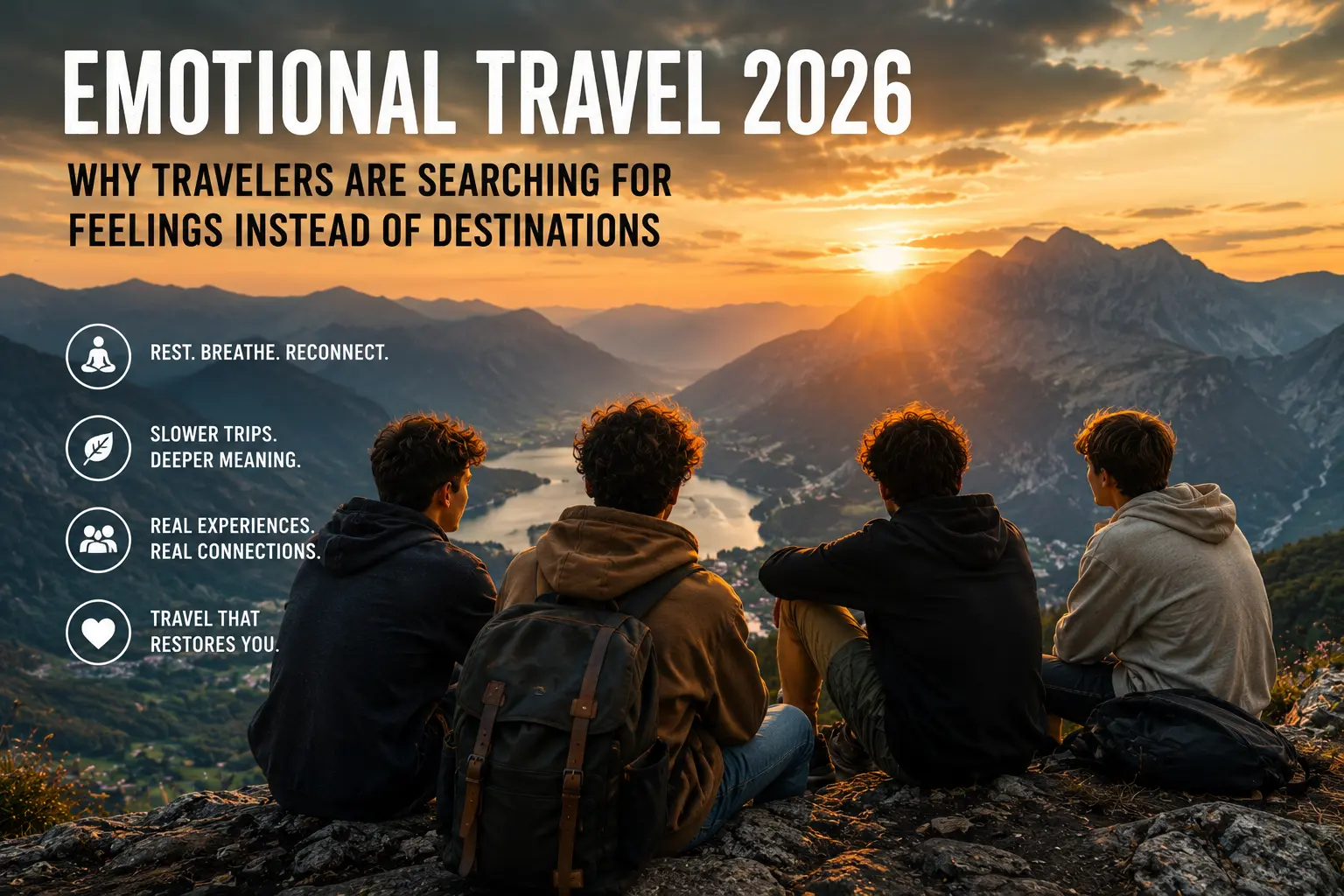
Emotional Travel 2026: Why Travelers Are Searching for Feelings Instead of Destinations
The global travel industry is entering a new era. Across Europe and the United States, travelers are beginning to move away from traditional checklist-style tourism and toward something far more personal. For decades, vacations revolved around geography. People chose a famous city, booked a hotel near major attractions, followed a packed itinerary, and returned home with photographs of landmarks they had always wanted to see.
In 2026, that formula is starting to lose its appeal.
More travelers are now choosing destinations based on how they want to feel rather than what they want to see. Instead of asking, “Where should I go?” people are asking different questions entirely. They want to know what kind of environment will help them slow down, reconnect with themselves, recover from stress, or regain a sense of creativity and emotional balance.
This shift has given rise to what many are calling Emotional Travel — a style of travel focused on emotional well-being, mental clarity, meaningful experiences, and genuine human connection.
The movement is being driven by modern exhaustion. Daily life has become increasingly fast, digital, and mentally demanding. Endless notifications, crowded schedules, urban noise, and work-heavy routines have changed the way people think about rest. For many travelers, vacations are no longer viewed as luxury status symbols. They are becoming necessary forms of emotional recovery.
As a result, travel habits are changing quickly. Travelers are showing growing interest in slower itineraries, rural destinations, wellness-focused escapes, digital detox retreats, and smaller communities that offer calm environments instead of constant stimulation.
The emotional quality of a journey is becoming just as important as the destination itself.
The Decline of Performative Tourism
One of the biggest reasons behind the rise of emotional travel is growing frustration with highly commercialized tourism. Over the past decade, social media transformed the way people traveled. Millions of tourists visited the same locations, stood in the same queues, and took nearly identical photographs from the same viewpoints.
While those trips often looked impressive online, the real-world experience was frequently exhausting. Crowded attractions, inflated prices, rushed schedules, and endless logistics left many people feeling drained rather than restored.
A noticeable backlash has emerged against this style of travel. More independent travelers are intentionally avoiding destinations that feel overly curated or dominated by mass tourism. Instead, they are searching for places that feel slower, quieter, and more connected to everyday local life.
Today, many travelers value a peaceful morning in a neighborhood café more than rushing through five tourist attractions in a single afternoon.
Across smaller towns in southern and eastern Europe, visitors are embracing longer stays and slower routines. Family-run guesthouses, local bakeries, village markets, and quiet public squares are becoming far more appealing than crowded resort districts or heavily commercial tourist zones.
The goal is no longer constant documentation. It is presence.
👉BOOK IMMERSIVE WELLNESS AND EMOTIONAL RESTORATION EXPEDITIONS ON GETYOURGUIDE
Designing Trips Around Emotional Needs
Traditional vacations are usually built around efficiency. Travelers try to maximize the number of places they can visit within a limited amount of time. Emotional travel takes the opposite approach.
Instead of filling every hour with activity, travelers are intentionally creating space for rest, reflection, and spontaneity. Free time is no longer viewed as wasted time. For many people, it has become the most valuable part of the journey.
One of the strongest emotional trends in 2026 is the search for what travelers describe as radical quiet.
Modern life is filled with noise. Notifications, traffic, crowded cities, and nonstop communication have made silence feel increasingly rare. Because of this, quiet environments are becoming deeply desirable.
This demand is driving increased interest in countryside cabins, mountain villages, coastal retreats, and remote nature-focused stays far away from busy urban centers.
In smaller regions surrounding the Dolomites, travelers are seeking hiking trails, fresh air, slower mornings, and peaceful landscapes rather than crowded city itineraries. Similar patterns are appearing in coastal Portugal, rural Albania, northern Spain, and quiet parts of Slovenia, where travelers are choosing calm environments over nightlife-heavy tourism.
For many people, these spaces offer something increasingly difficult to find in modern life: mental stillness.
Travel as Creative Recovery
Another major aspect of emotional travel is creativity.
Many professionals feel mentally exhausted by repetitive routines and constant screen exposure. Travel is increasingly being used as a tool for creative renewal rather than simple entertainment.
Instead of rushing between attractions, travelers are participating in experiences that encourage focus, curiosity, and skill-building. Cooking workshops, pottery classes, writing retreats, photography walks, woodworking programs, and countryside artist residencies are becoming increasingly popular among people searching for creative recovery.
In quieter regions of southern Europe, longer creative stays are becoming common among writers, designers, remote workers, and independent professionals who want distance from fast-paced city life.
The destination itself often becomes secondary. What matters most is the atmosphere it creates.
A small village with quiet evenings, local markets, natural scenery, and unhurried routines may provide more emotional value than a luxury destination filled with distractions and crowded attractions.
👉START YOUR 2026 JOURNEY TOWARD PEACE, PRESENCE, AND EMOTIONAL RESTORATION
The Search for Human Connection
Emotional travel is not only about solitude. For many travelers, it is also about rebuilding genuine human connection.
Despite living in an extremely connected digital world, many people report feeling socially disconnected in everyday life. Because of this, travelers are increasingly drawn toward experiences that create authentic interaction with local communities and fellow travelers.
This has contributed to growing interest in family-run guesthouses, communal dining experiences, farm stays, homestays, and community-based tourism initiatives.
Rather than remaining anonymous tourists, visitors increasingly want to feel like temporary participants in local life.
In smaller coastal towns and mountain communities, travelers are spending more time in neighborhood cafés, public squares, local markets, and independently owned spaces instead of isolated resort environments.
The emotional value often comes from simple moments. Long conversations over dinner, learning regional traditions, sharing stories with strangers, shopping at local markets, or participating in everyday routines can create memories that feel far more meaningful than crowded sightseeing schedules.
These experiences create a sense of belonging that many travelers feel is missing from highly commercial tourism.
Why Smaller Regions Are Benefiting Most
One of the clearest effects of emotional travel is the growing popularity of secondary destinations.
While famous global cities continue to attract millions of visitors every year, many experienced travelers are increasingly exploring smaller regional areas instead. Mountain villages, farming valleys, lakeside communities, and coastal towns are gaining attention because they offer slower daily rhythms, lower tourism pressure, more affordable prices, and stronger local identity.
In these places, life continues naturally without being fully transformed by tourism.
Neighborhood cafés primarily serve residents. Public squares remain community gathering spaces. Markets operate at a local pace rather than a tourist pace. The atmosphere feels lived-in rather than commercially staged.
For emotional travelers, this authenticity is extremely valuable.
It allows people to slow down, think clearly, reconnect with themselves, and experience environments that feel emotionally genuine rather than carefully manufactured for social media visibility.
👉BOOK IMMERSIVE WELLNESS AND EMOTIONAL RESTORATION EXPEDITIONS ON GETYOURGUIDE
Emotional Travel and Budget Consciousness
Interestingly, emotional travel is often more affordable than traditional luxury tourism.
Because the focus is emotional quality rather than visual status, travelers frequently spend less money on unnecessary commercial experiences.
Instead of paying premium prices for crowded tourist restaurants, luxury shopping districts, or heavily marketed attractions, many travelers are choosing locally owned accommodations, regional transport systems, countryside rentals, village markets, and home-cooked meals.
This creates a style of travel that feels both emotionally richer and financially sustainable.
Money is being redirected away from performative luxury and toward experiences that provide genuine emotional value.
Technology’s Changing Role in Travel
Technology still plays an important role in emotional travel, but its purpose is changing.
In previous years, travel technology was heavily connected to online visibility and constant documentation. Social media posting, photo sharing, and digital performance became central parts of the travel experience.
In 2026, many travelers are instead using technology primarily for navigation and accessibility.
Translation apps, regional train platforms, offline maps, and local booking tools are helping independent travelers confidently explore quieter regions that previously felt difficult to access.
This allows people to travel more slowly and flexibly without depending entirely on large commercial tourism systems.
For many travelers, the ideal trip now involves less screen time, fewer notifications, reduced online pressure, and deeper engagement with physical surroundings.
Technology becomes supportive rather than dominant.
👉DISCOVER SLOWER, DEEPER, AND MORE MEANINGFUL TRAVEL EXPERIENCES FOR 2026
Frequently Asked Questions
What is Emotional Travel?
Emotional Travel is a travel philosophy where people choose destinations based on emotional goals rather than geographic popularity. Travelers prioritize experiences that support mental clarity, rest, creativity, healing, or meaningful human connection.
Is Emotional Travel only for solo travelers?
No. Emotional travel works well for couples, friends, and families. The key difference is intentional pacing and a shared focus on meaningful experiences instead of rushed sightseeing schedules.
Is Emotional Travel expensive?
In many cases, it is actually more affordable than traditional tourism. Smaller towns, locally owned accommodations, slower itineraries, and regional transportation often reduce overall costs while improving emotional quality.
What types of destinations fit Emotional Travel best?
Travelers often look for rural villages, mountain regions, coastal communities, nature-focused retreats, and less commercialized towns with slower rhythms and strong local identity.
Does Emotional Travel mean avoiding famous cities completely?
Not necessarily. Many travelers still visit major cities but approach them differently. They stay longer, visit fewer attractions each day, spend more time in local neighborhoods, and focus on atmosphere rather than constant movement.
Final Thoughts: A Return to Meaningful Exploration
The rise of emotional travel in 2026 reflects a broader cultural shift in how people think about rest, fulfillment, and personal well-being.
Travel is becoming less about collecting destinations and more about choosing experiences that genuinely improve emotional health and quality of life.
People are increasingly protecting their time, energy, and finances by avoiding vacations that feel rushed, overcrowded, or emotionally empty.
Instead, travelers are rediscovering the value of slower mornings, meaningful conversations, natural landscapes, local culture, creative recovery, and intentional living.
At its core, emotional travel represents a return to a more human form of exploration — one centered not on performance, but on presence.
For travelers planning journeys in 2026 and beyond, the most memorable destinations may no longer be the most famous ones. They may simply be the places that allow people to feel calmer, clearer, more connected, and more fully alive.
👉PLAN YOUR EMOTIONAL RESTORATION JOURNEY FOR 2026 TODAY
👉Read the full article here: Croatia Travel Guide 2026: Best Beaches & Islands
👉 Have a question or feedback?
Leave us a message below — we value your input 100%
✅ Travel Deals You Should Check
- ✅ Get the best flight deals and save money ✈️
Discover unbeatable flight deals - ✅ Find top-rated hotels at the best prices 🏨
Browse affordable flight options - ✅ Compare travel options instantly 🔎
Compare cheap flights worldwide - ✅ Discover amazing tours and experiences 🌍
Find budget-friendly airfare - ✅ Stay connected anywhere with travel eSIM 📶
Search the best flight prices - ✅ Protect your trip with reliable insurance 🛡️